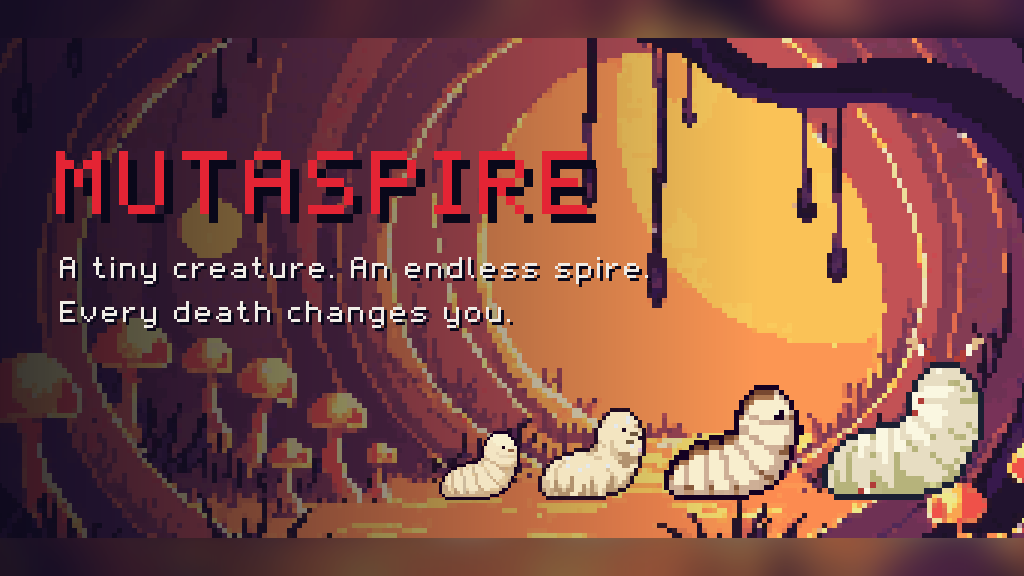
Climb a living spire. Wear what you defeat.
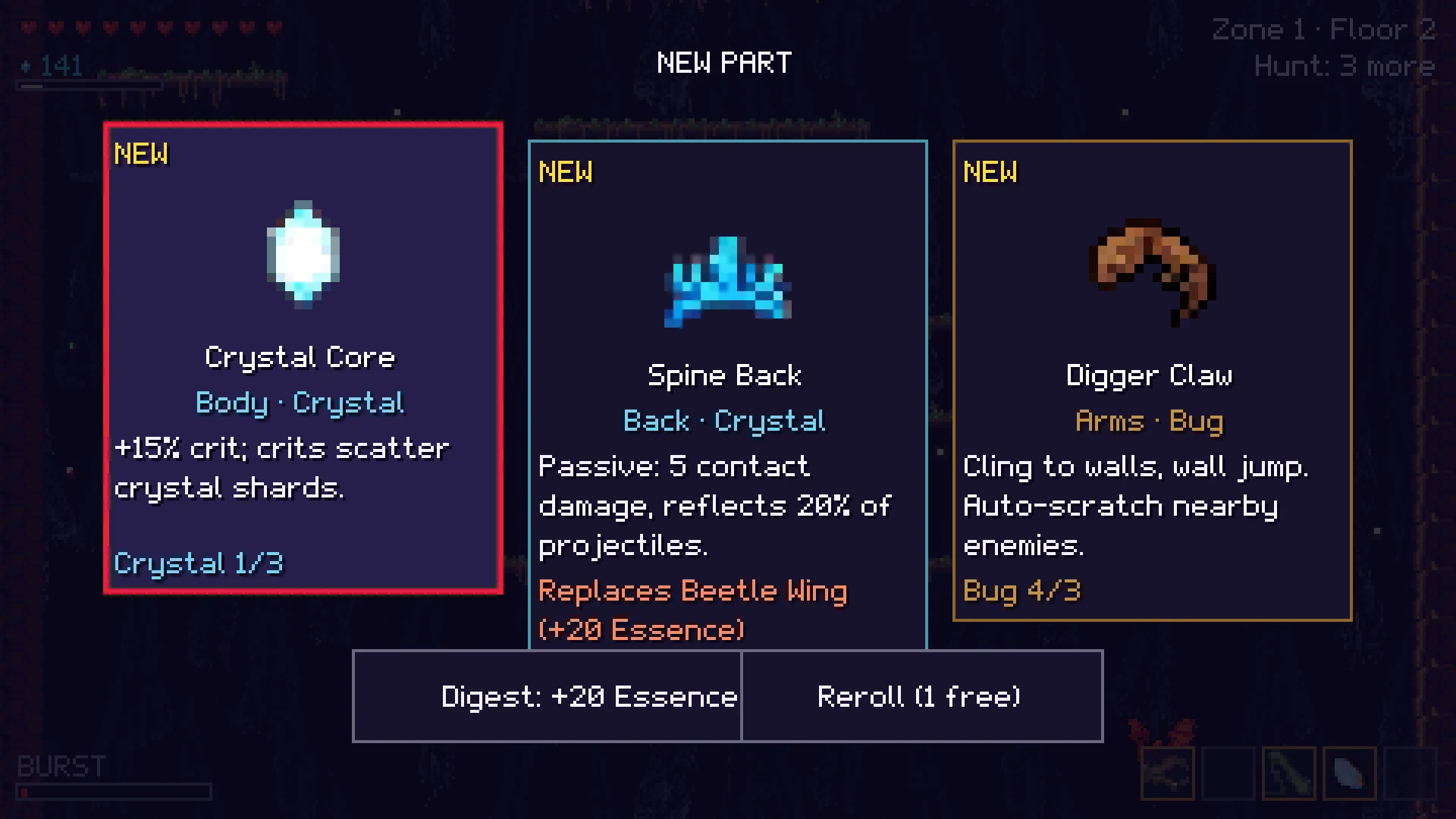
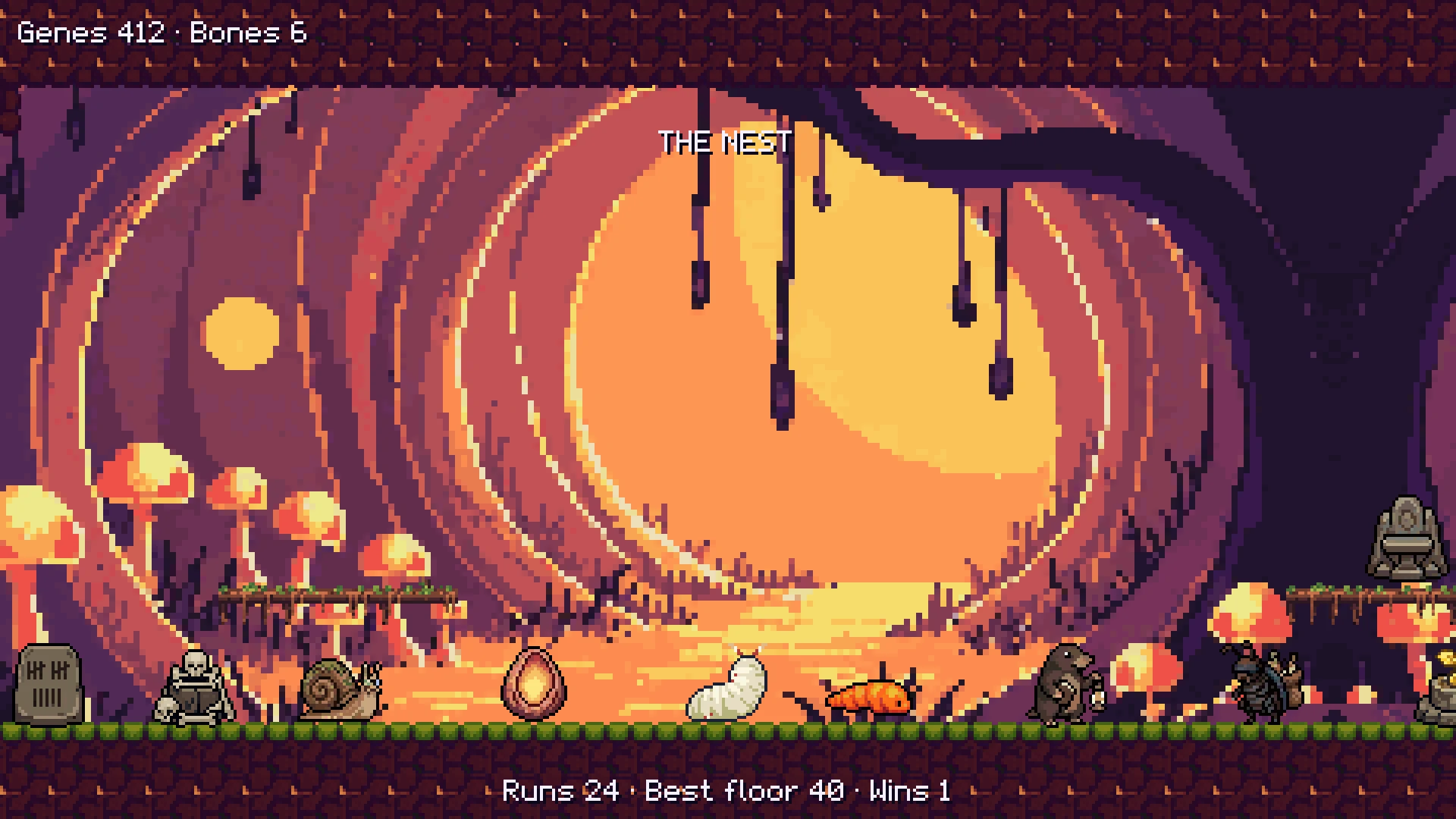
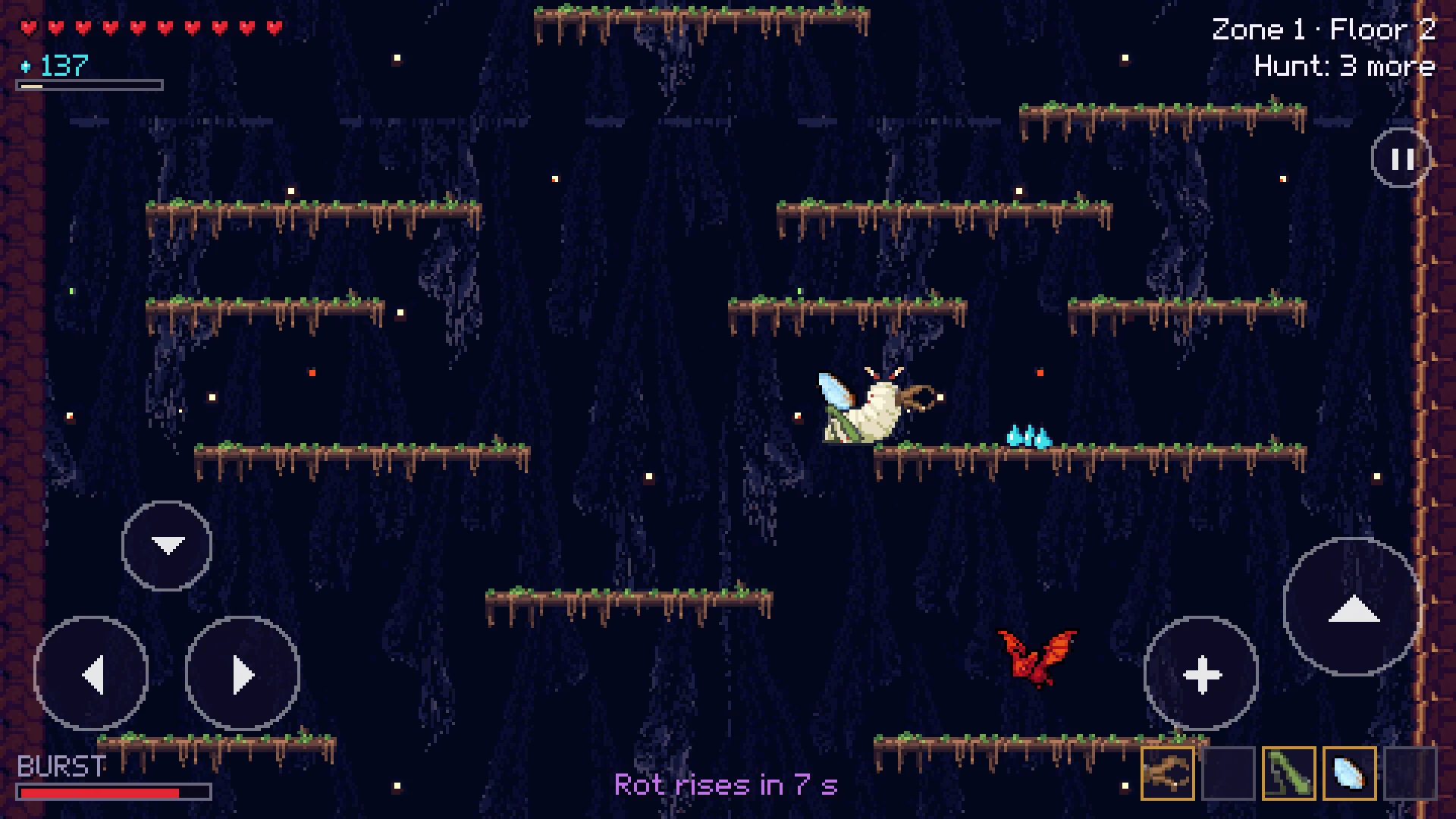
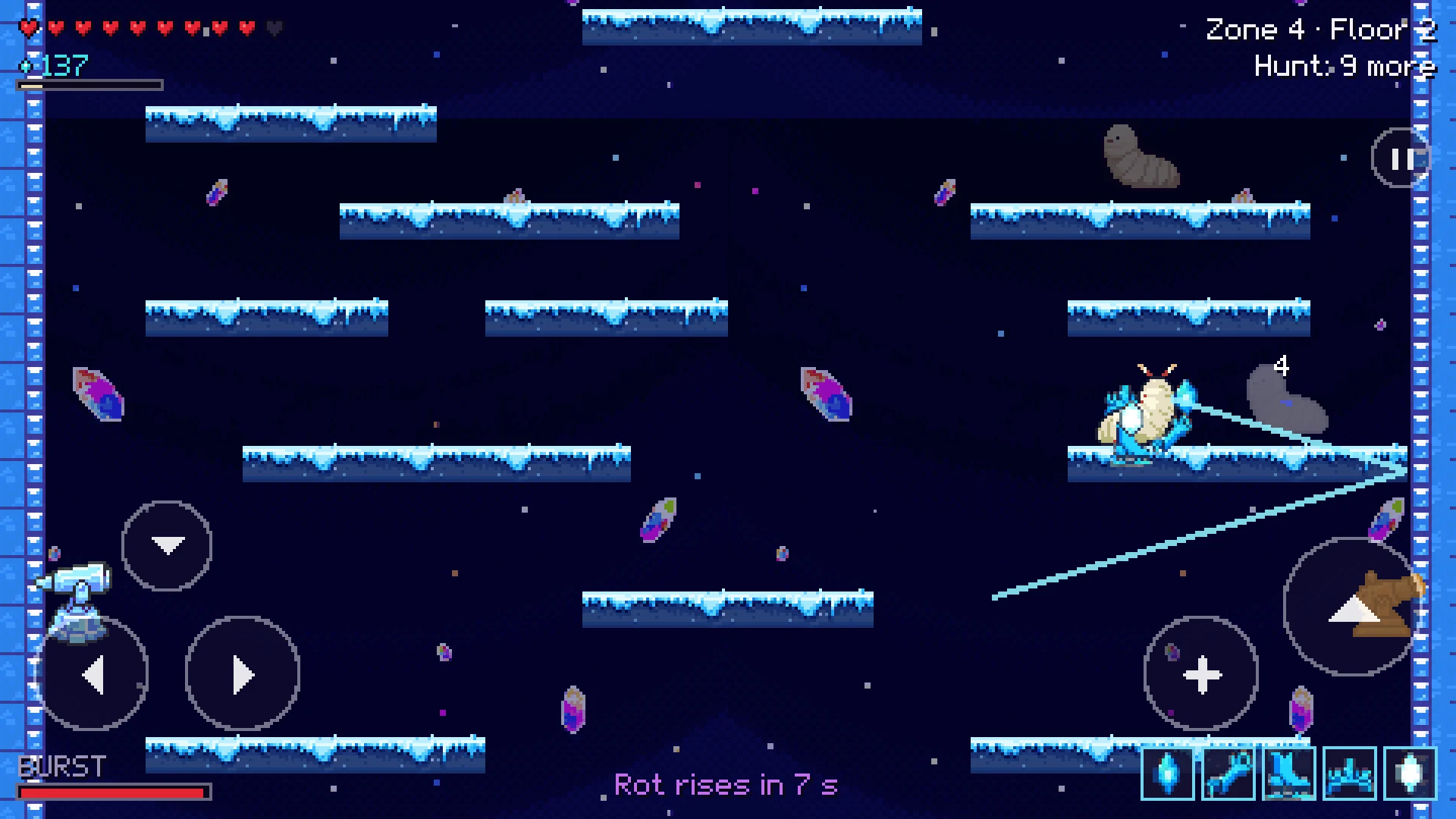
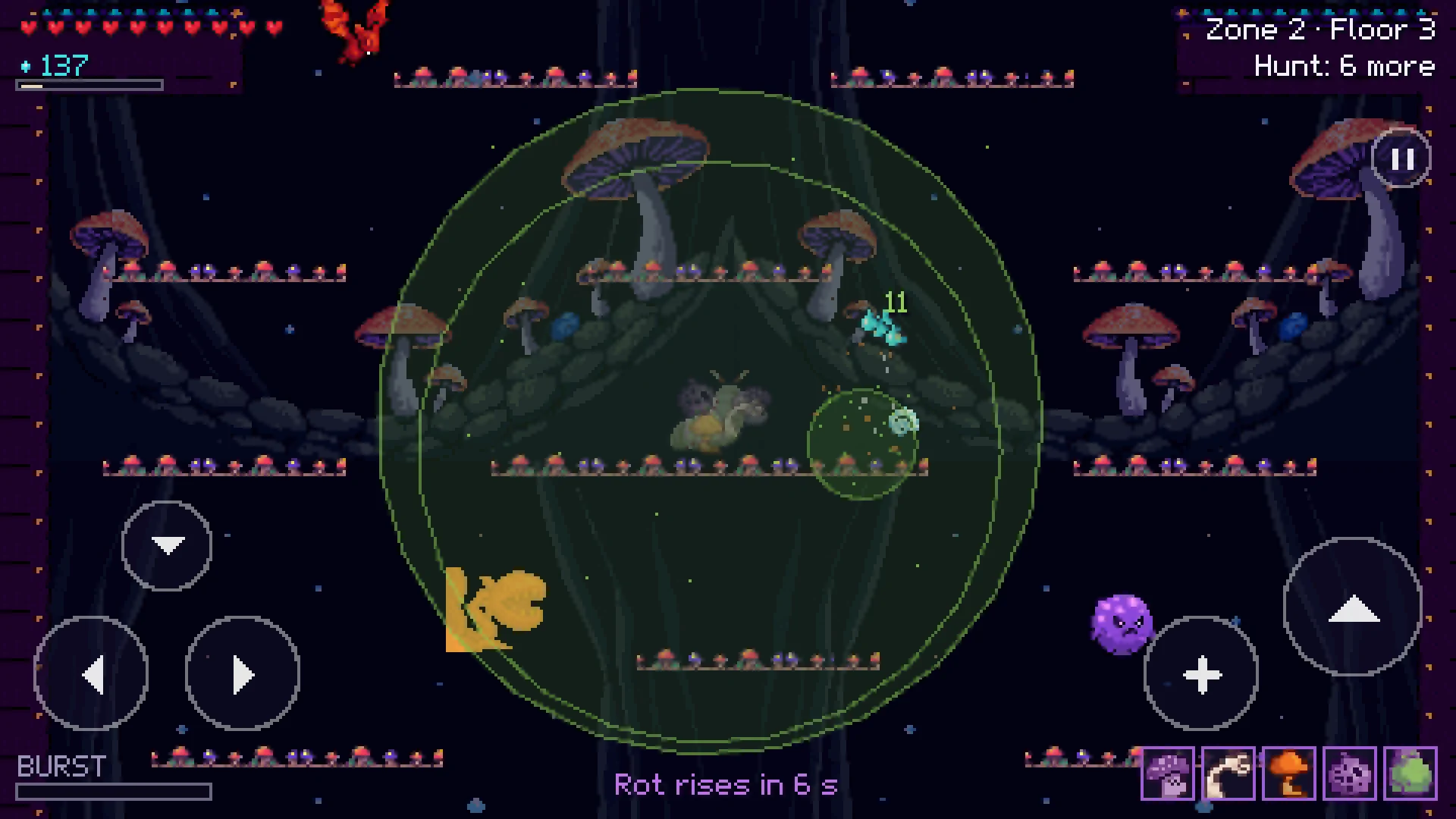
You are Muta, a small, shapeless larva born in the Nest at the foot of a breathing tower. The only way is up. Every floor is full of monsters, and every monster you beat leaves a part behind: a grasshopper leg for a double jump, a beetle wing to glide, a rivet cannon for a head, a crystal core that makes every critical hit explode into shards.
Every part changes both how Muta looks and how Muta plays. You never open a menu to check your build — you look at your creature.
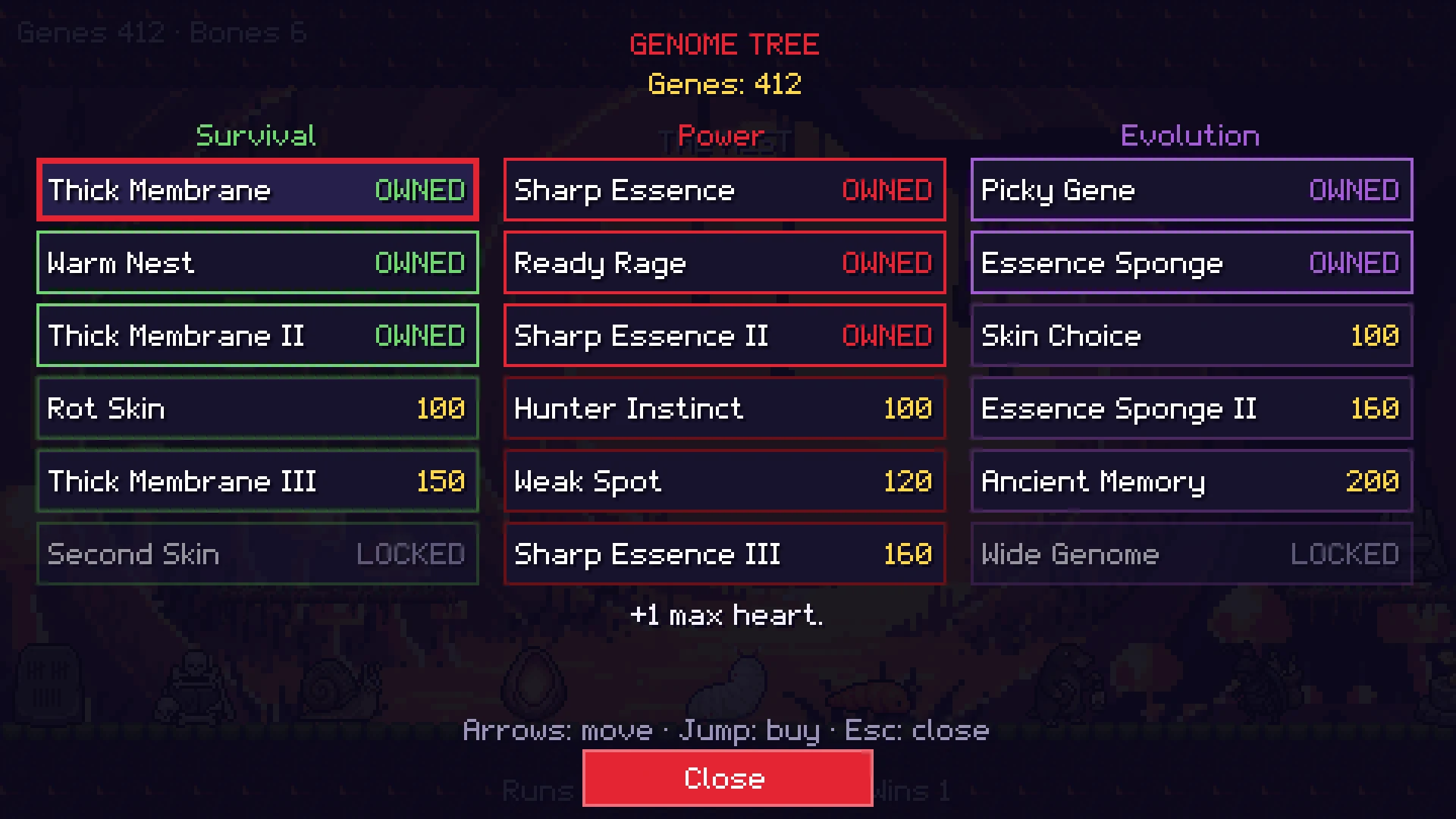
When Muta dies, the run ends, but the creature doesn't disappear. The spire gives birth to it again in the Nest, and the Genes and Bones you brought back make it permanently stronger, unlock new part families and slowly evolve its body from Larva to Ancient.
How a climb works
- Pick a door. At the top of every floor there are two or three exits. The icon above each one tells you what the next floor gives: a new part, a pile of Essence, a healing cocoon, an Evolution Tube, an event, a challenge, a fossil or a wandering merchant.
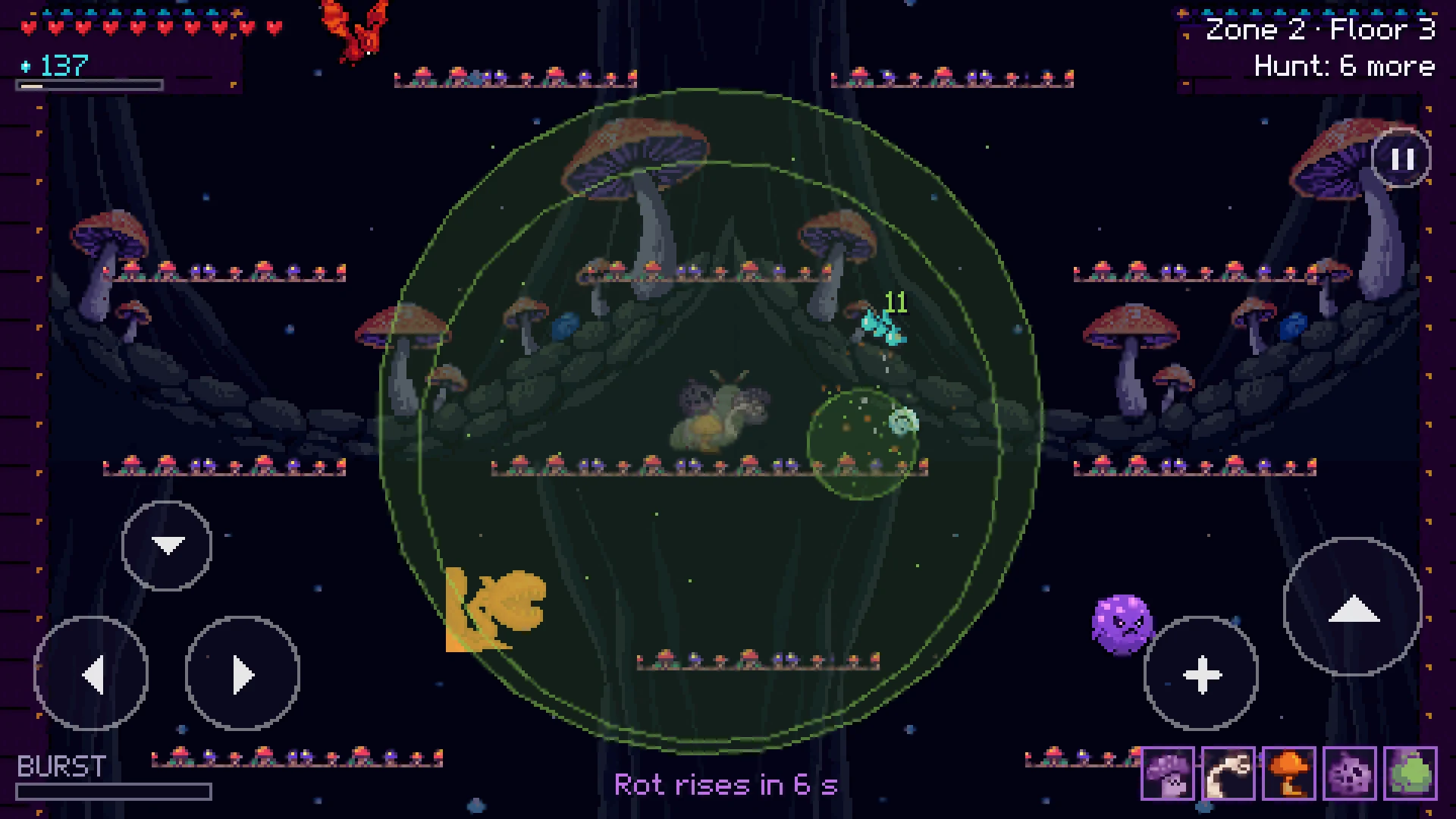
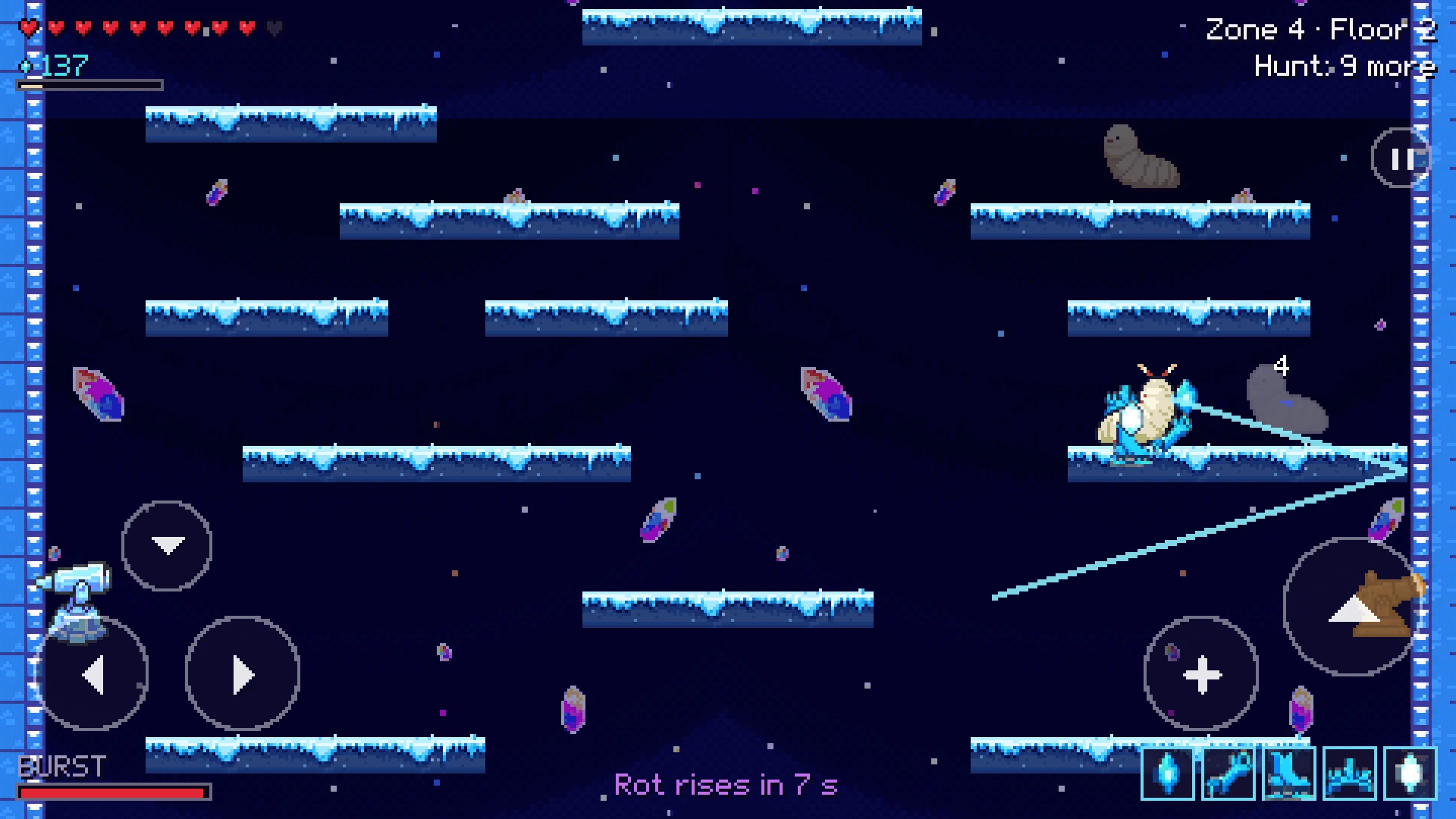
- Survive the floor. Your attack fires on its own; your job is to move, jump, dodge and decide when to unleash your Mutation Burst. Some floors are hunts, some are climbs, some are sieges.
- Outrun the Rot. A purple tide rises from the bottom of every floor. It doesn't kill on touch, but it hurts — and it swallows every drop of Essence you leave behind.
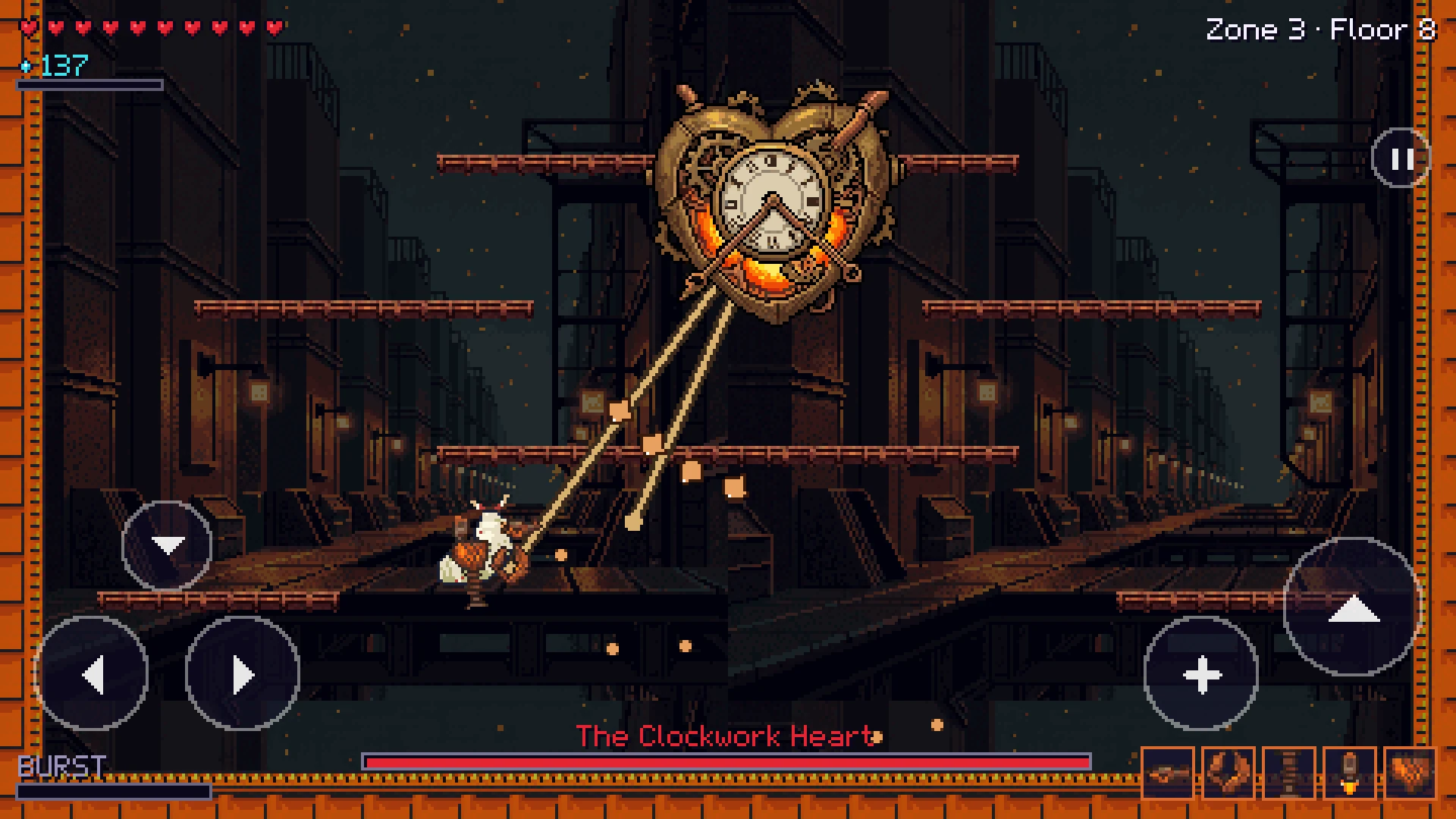
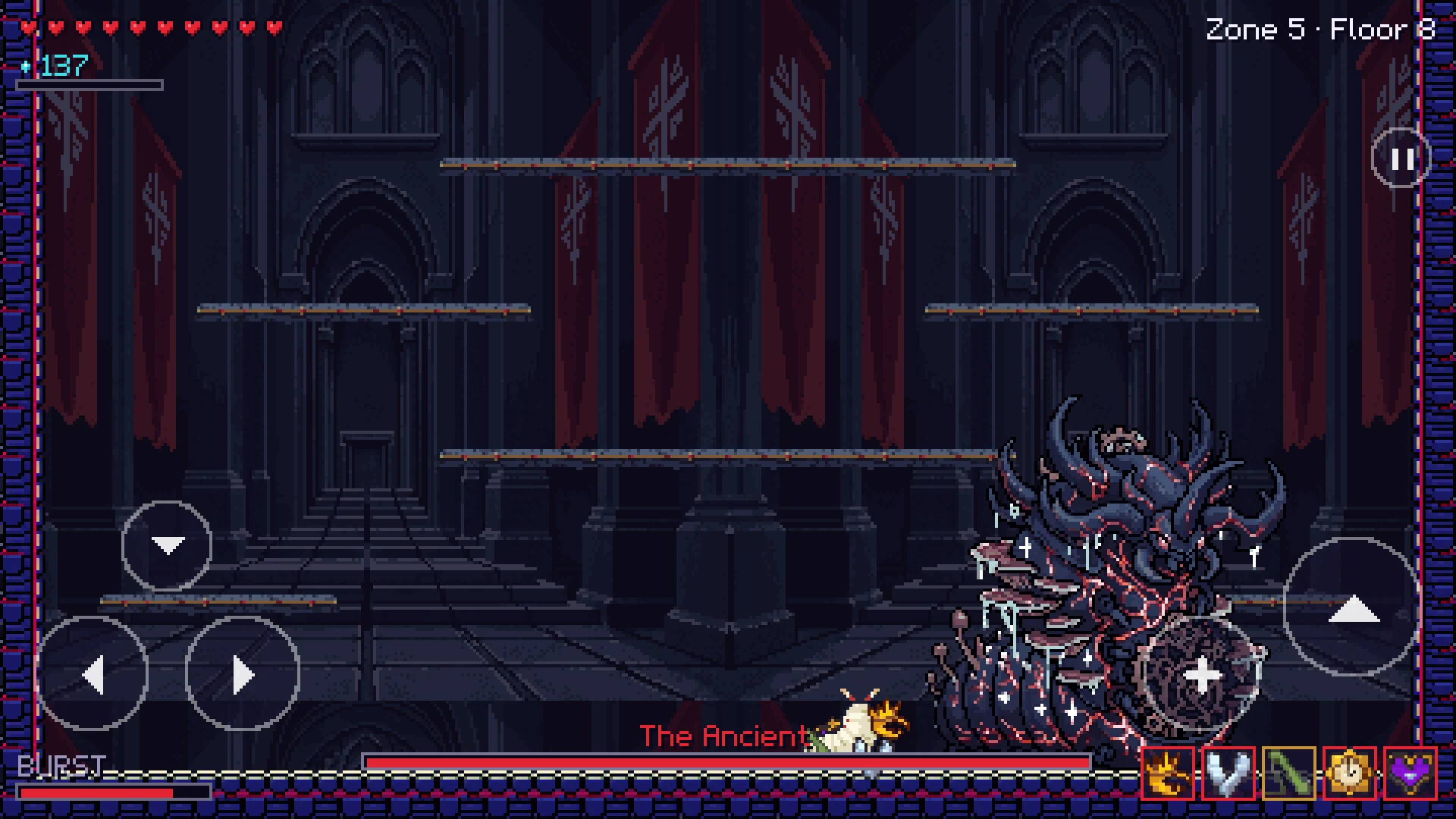
- Beat the boss. Every eighth floor ends a zone with a boss — and a choice between a legendary Ancient part or a big Gene reward.
Five zones, forty floors. A successful climb takes about half an hour; a single floor, less than a minute.