Orbit Swarm devlog #1: Why a Star Map?
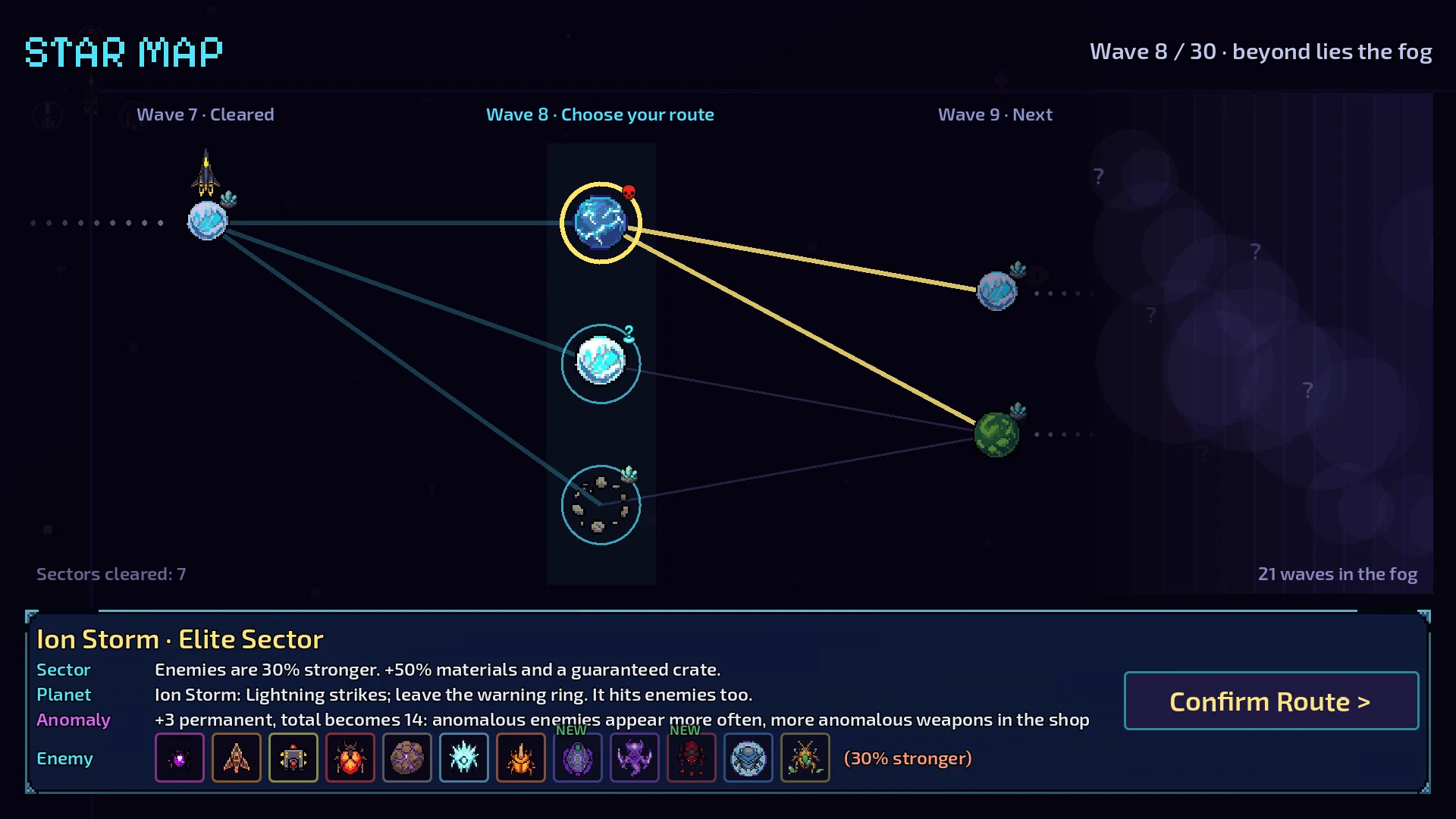
Survive, shop, repeat gets old fast. A branching map with fog, planets with rules and a permanent Anomaly give every run a shape.
A wave-survival game can easily turn into a loop: survive the wave, visit the shop, repeat. The fighting is there, but there are few decisions between the fights. We wanted every run to have a shape of its own.
A map with fog
That's where the Star Map comes in. Each wave is now one column on a branching map, and after every wave you pick one of the one or two sectors connected to where you are. We wanted that choice to be informed, but not solved. You see the column you just left, the one you're choosing from and the one after it. Everything beyond that is fog.
The info box tells you the sector's rule and shows which enemies might appear, so you're always choosing between real trade-offs: an Elite sector hits 30% harder but pays 50% more crystals and guarantees a crate; a Trade Station skips the fight but gives your build nothing to prove itself against.
Planets are places
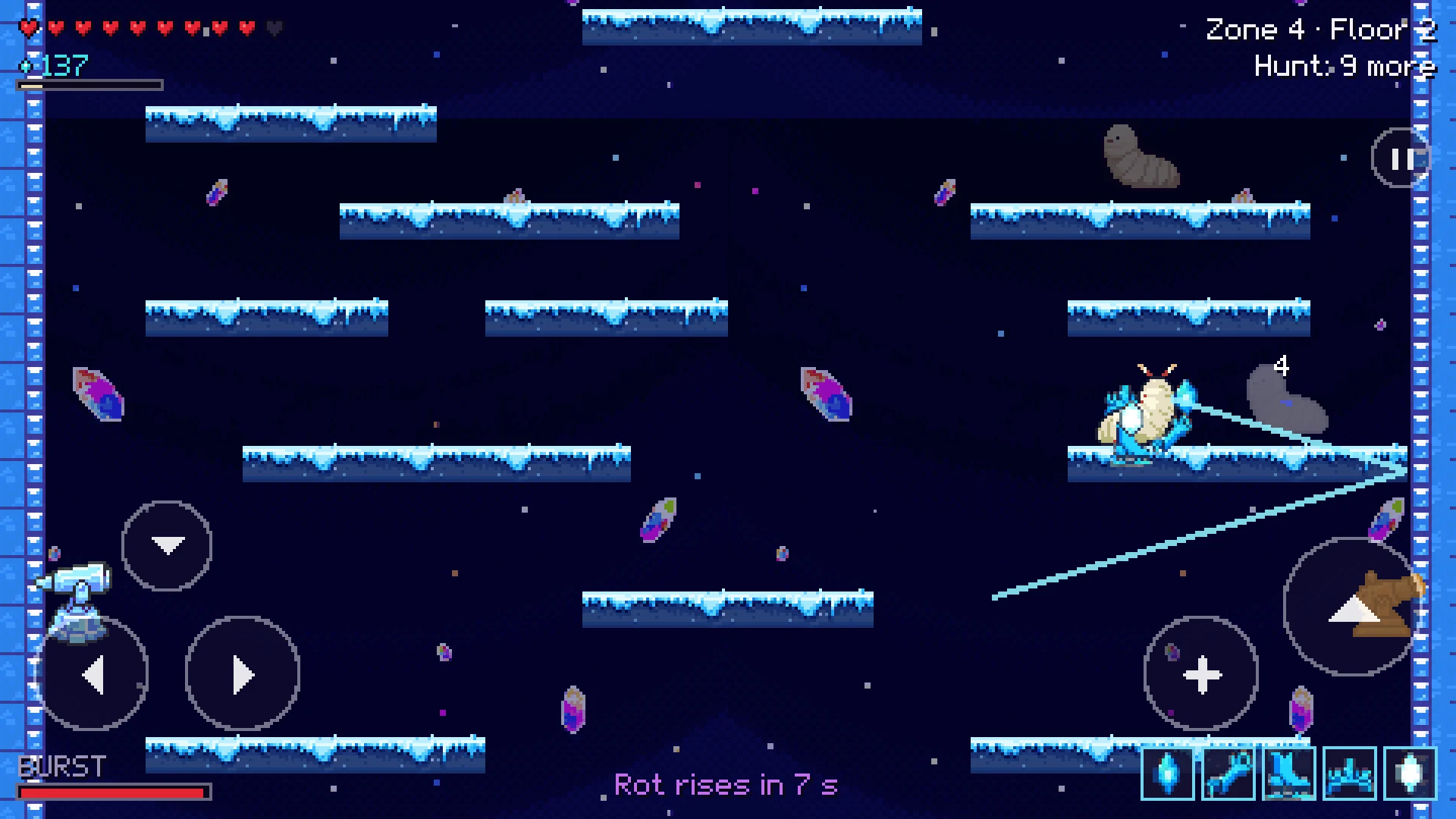
Planets came next. A sector isn't just a difficulty number; it's a place. On the Ice Planet your ship slides. In the Ion Storm, lightning strikes and you need to step out of the warning ring. On the Toxic Planet, poison gas closes in and pierces your armor. Each planet also has a Guardian, and at waves 5, 15 and 25 the map offers two of them, so you pick the boss you'd rather fight.
Anomaly
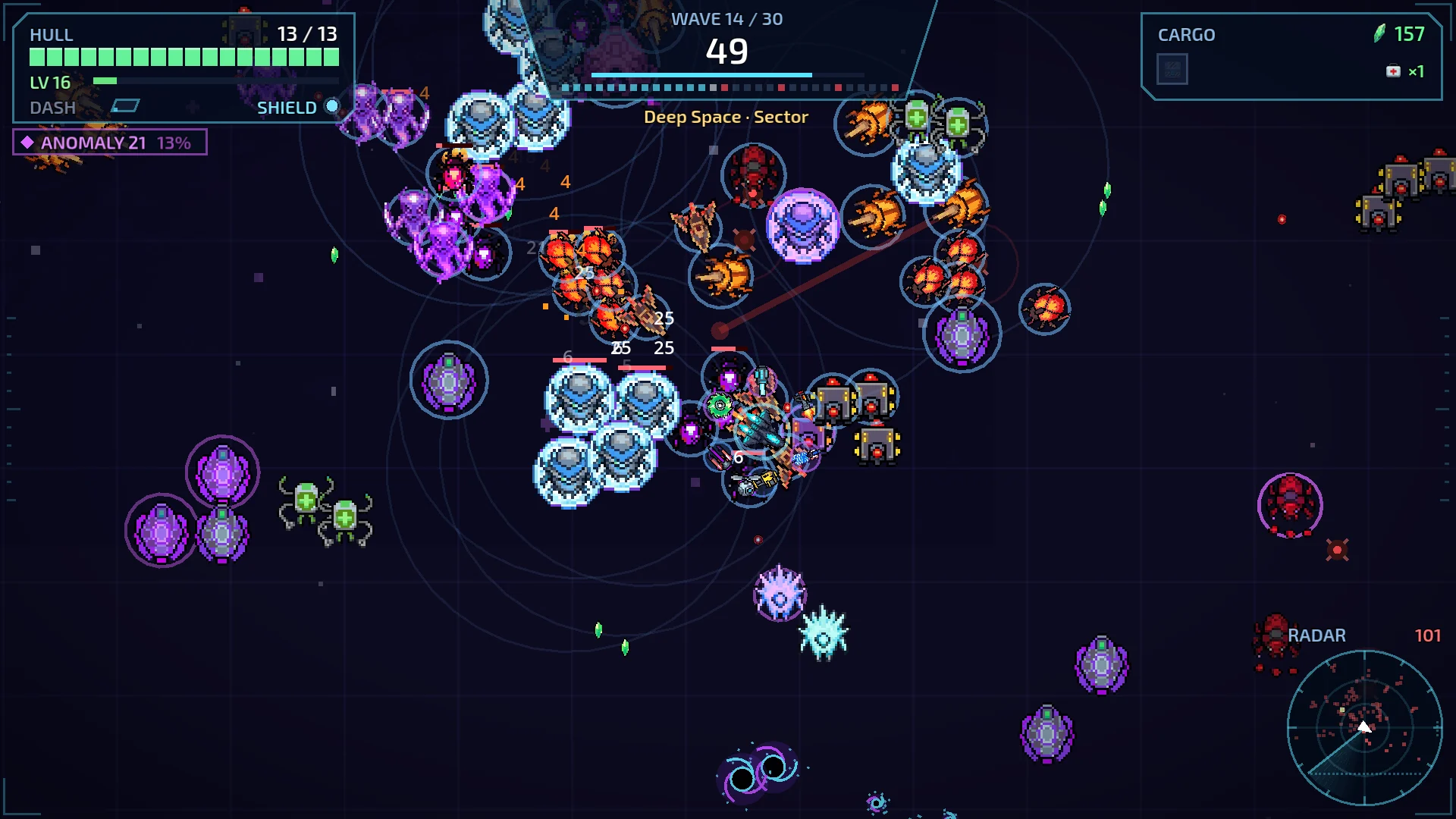
The last piece was Anomaly. Every planet you enter adds a permanent amount: +1 for Deep Space, up to +3 for the most dangerous worlds. Anomaly makes enemies stronger and more unpredictable, but it also brings stronger anomalous weapons to the shop. The route you chose at wave 4 is still with you at wave 24, and that's exactly what we wanted.