YARIK devlog #3: Into the Rift
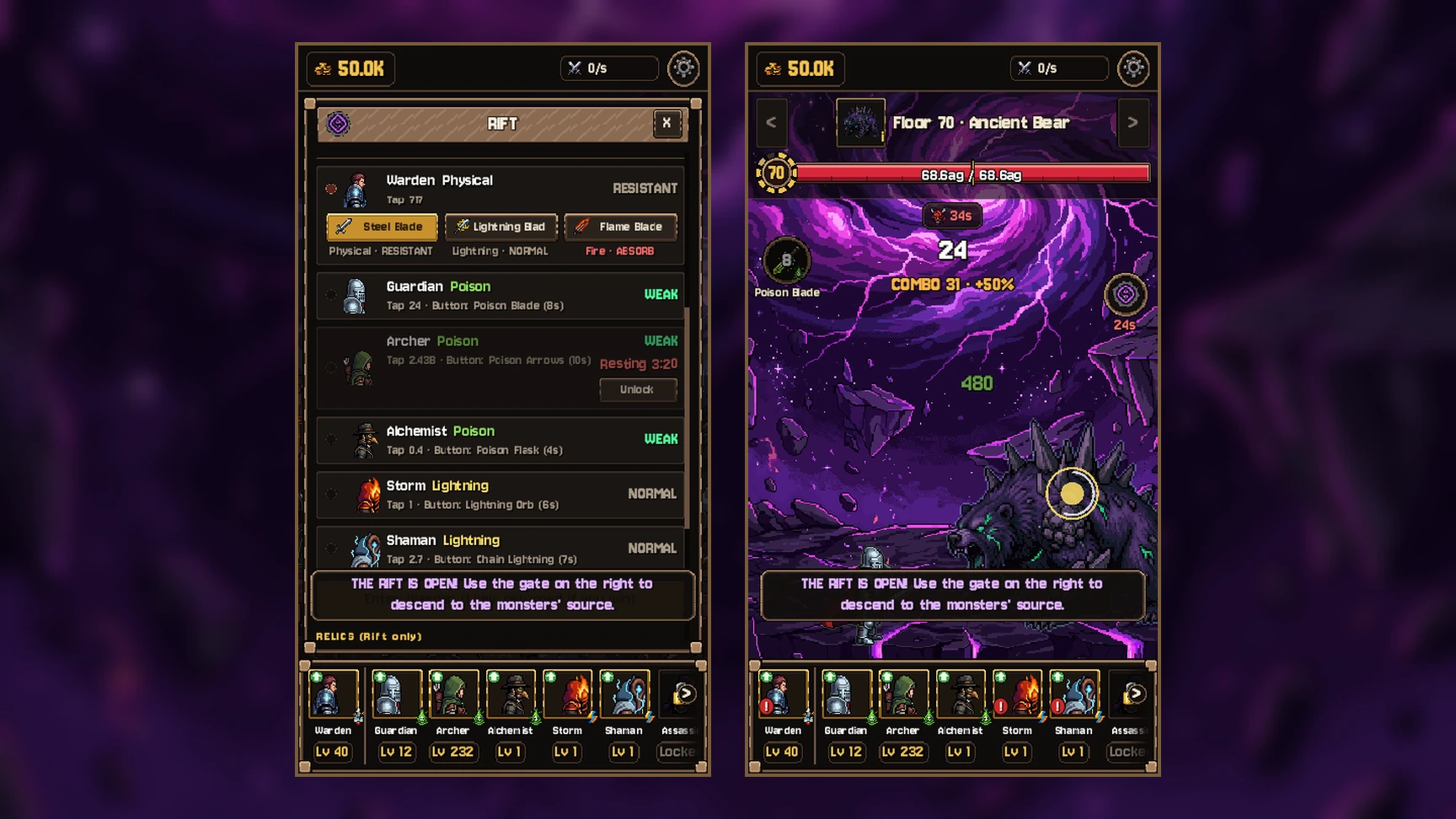
The main game plays itself. The Rift doesn't. Thirty seconds, one character, no auto-attacks — how we turned a too-easy side mode into the most active part of YARIK.
The creatures come out of the Rift, so sooner or later the Wardens go in. The Rift is YARIK's challenge mode, and it's the opposite of the rest of the game: the main hunt is idle, the Rift is thirty seconds of everything you've got.
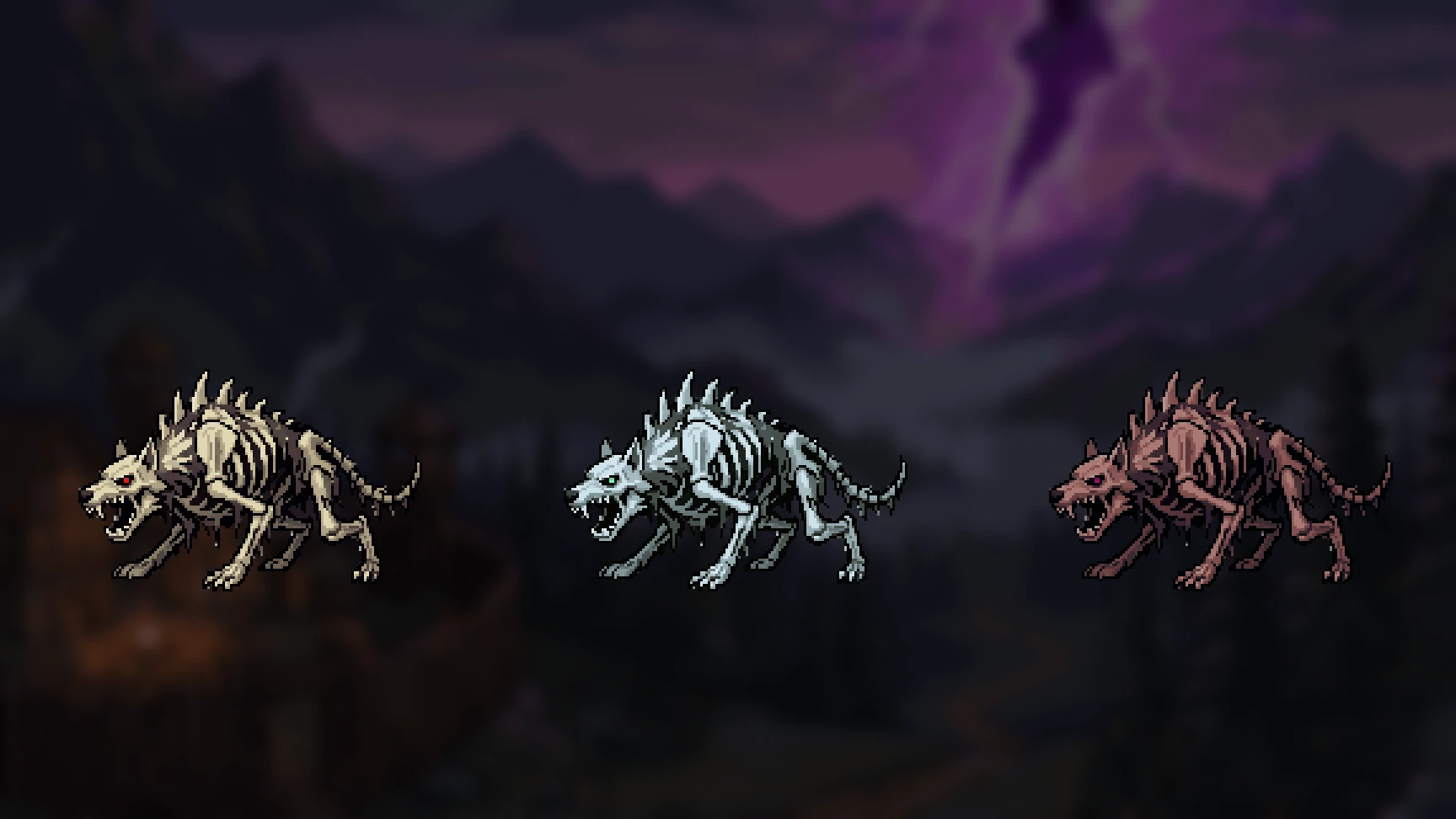
Its gate stands next to the battlefield from the very first minute, locked. Tap it and it tells you exactly what opens it — evolving the Bone Wolf — and how close you are. Hiding a system until it unlocks means players never plan for it; showing it locked gives them a goal.
The version that was too easy
The first Rift let your whole team in. Everyone attacked on their own, the floor lasted sixty seconds, and the best strategy was to watch. It was a slower copy of the main game with a timer on top.
So we rebuilt it around one idea: in the Rift, you do the fighting.
- You enter with one character — the Warden or one hero.
- Nothing attacks on its own. All damage comes from your taps.
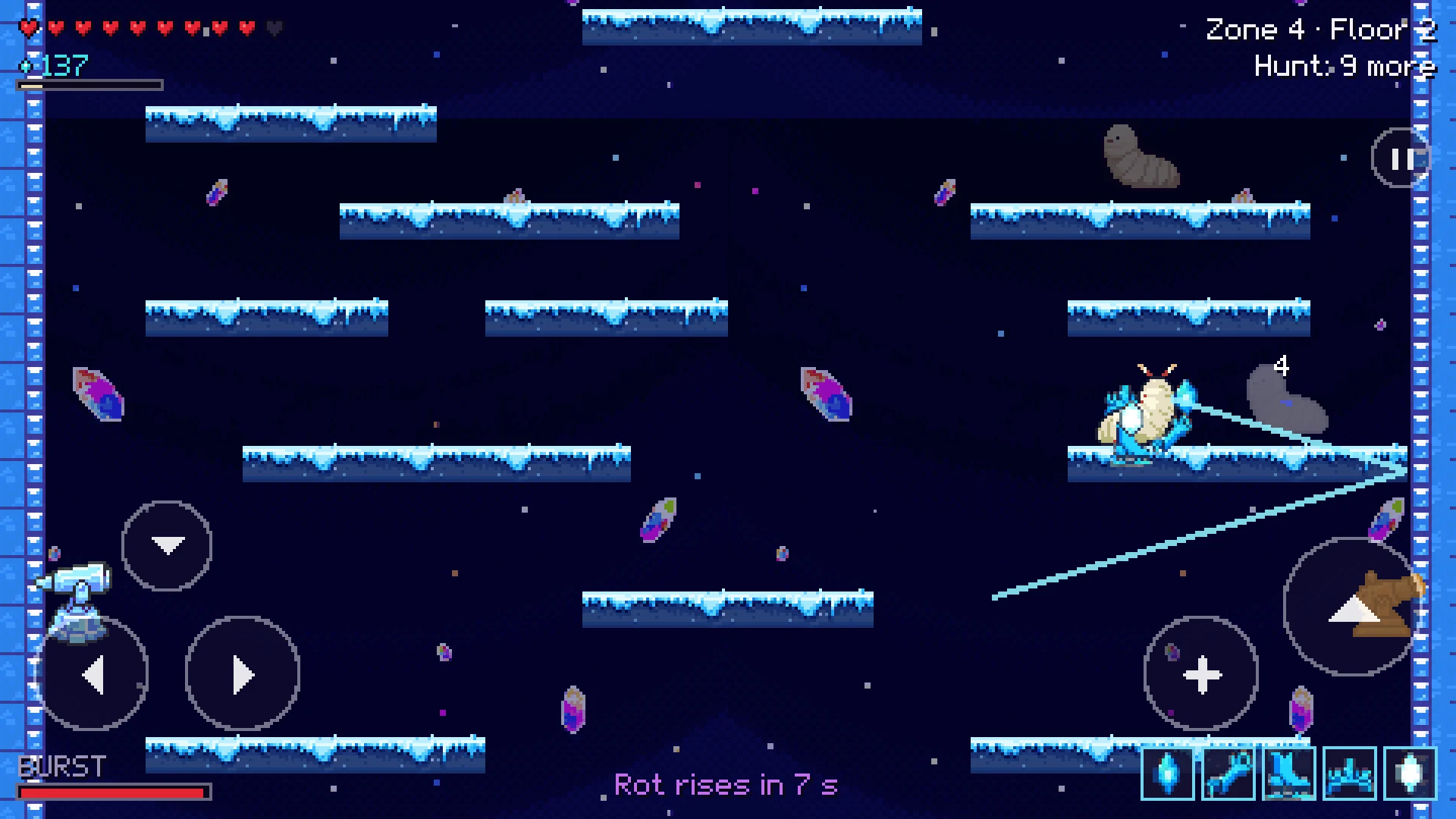
- A floor lasts 30 seconds. Run out of time and the floor is lost.
A hero's tap deals half of what that hero does per second in the main game. Tap twice a second and you match your idle damage; tap faster and you beat it. That keeps slow, heavy hitters and fast archers on equal ground. The hero's cooldown skills become a big round button you press yourself, and every hero brings their damage type, crits and effects with them.
Making thirty seconds count
- Combo. Every uninterrupted tap adds +2% damage, up to +50%. Stop for half a second and it resets.
- Weak point. Every 6 seconds a yellow ring appears on the boss for a second and a half. Taps inside it deal triple damage.
- A tap limit. Only ten taps a second count — for balance, and so an auto-clicker doesn't win.
Pick before you enter
There's no time to change skills mid-floor, so the choice comes first. The entry screen lists every character with their damage type and how this floor's boss reacts to it — WEAK, RESISTANT, IMMUNE, ABSORB or NORMAL — and below the selected character, all three of their skills with their reactions. In the Rift, reactions are known from the start; the test is using them under pressure.
Fixed floors
Every player meets the same boss with the same modifiers on the same floor. The floor number decides everything, so depth is a fair measure of strength. Bosses come from the main game's sixteen bosses and their evolutions, and each floor is about 1.9 times tougher than the last.
Floors carry modifiers — one from floor 1, two from floor 20, three from floor 40:
- Reflection: critical hits heal the boss.
- Shifting: reactions shuffle every 15 seconds.
- Silence: the skill button doesn't work.
- Shield: tap damage −30%.
- Frenzy: every 20 seconds the boss rages and recovers 20% of its health.
- Seal: one damage type does nothing on this floor — usually one the boss is weak to.
Keys, rest and rewards
You get three keys a day. Entering spends one; winning gives it back. Lose, and that character needs five minutes of rest before entering again (real time — closing the game doesn't skip it, and quitting mid-floor counts as a loss).
The first clear of each floor gives Rift Shards, spent on relics that only work inside the Rift: the Hourglass (+5 seconds), the Rift Dagger (+25% damage), the Mirror Shield (ignores Reflection) and the Calm Stone (ignores Silence). The Rift gives no gold and no loot on purpose, so it never changes the balance of the main game.
What's next
In the simulator, the Warden is the best pick on almost every floor, and the late-hired heroes fall far behind. A mode built around choosing a character shouldn't have one right answer, so evening that out comes next. Further out, fixed floors make a "deepest floor" leaderboard possible — once YARIK has online features, which we're planning carefully so the game still plays fully offline.
The gate is open. How deep can you go?